Short answer: which iron should you choose?
If an iron supplement is justified, a sensible first choice is a gentle glycinate form (bisglycinate, also called a chelate) taken with vitamin C — several sources describe it as easier on the digestion than classic ferrous sulfate, although direct head-to-head studies are scarce. If capsules do not suit you, you can try a chewable tablet or an oral spray. Most people who get enough iron from food do not need a supplement: if you suspect a problem, check your ferritin and haemoglobin levels first.
- Sensitive stomach: try glycinate or citrate, take the supplement with a meal and stay within the dose on the label.
- Dislike swallowing capsules: a chewable tablet or an oral spray (according to the manufacturer it is partly absorbed through the lining of the mouth; evidence for any advantage is limited).
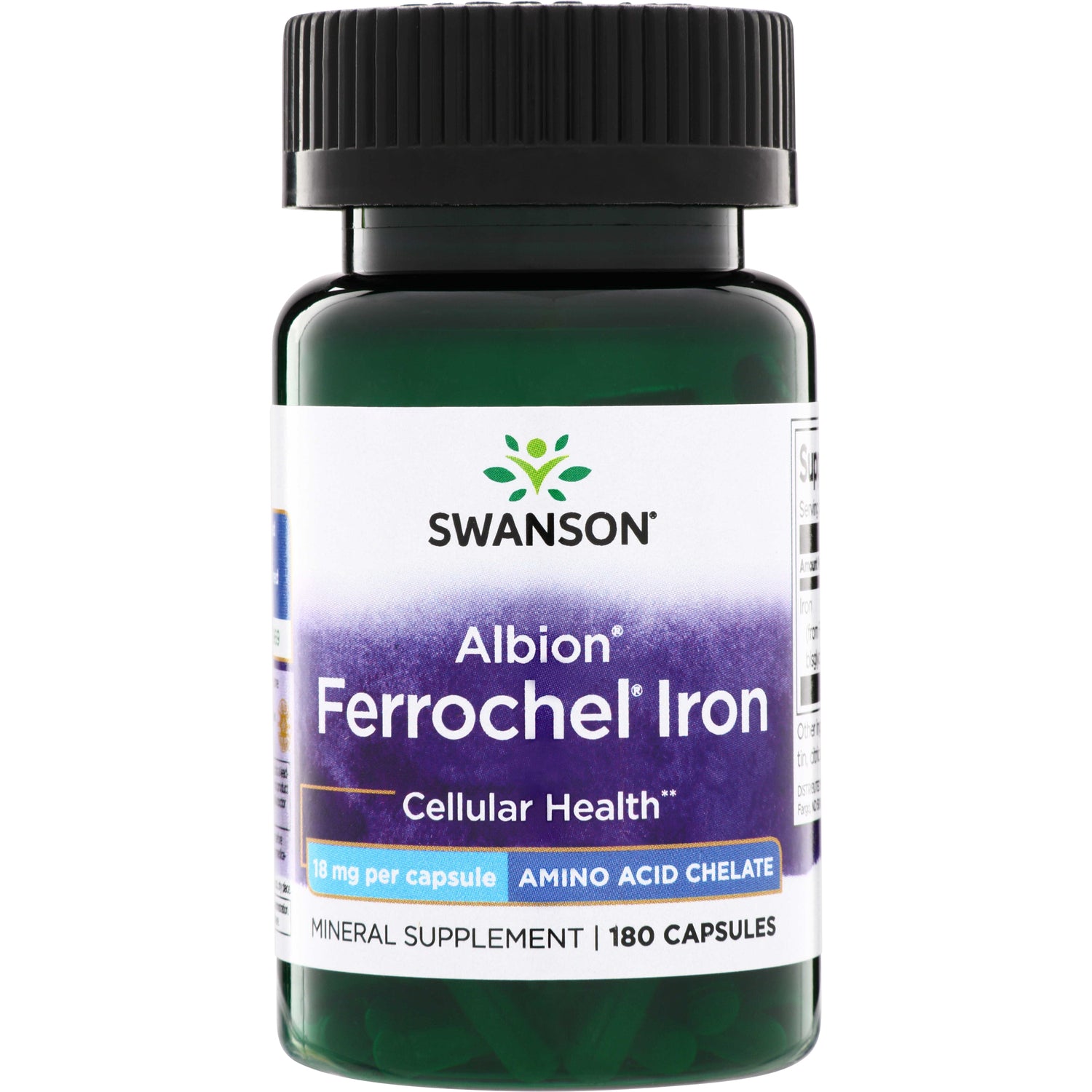
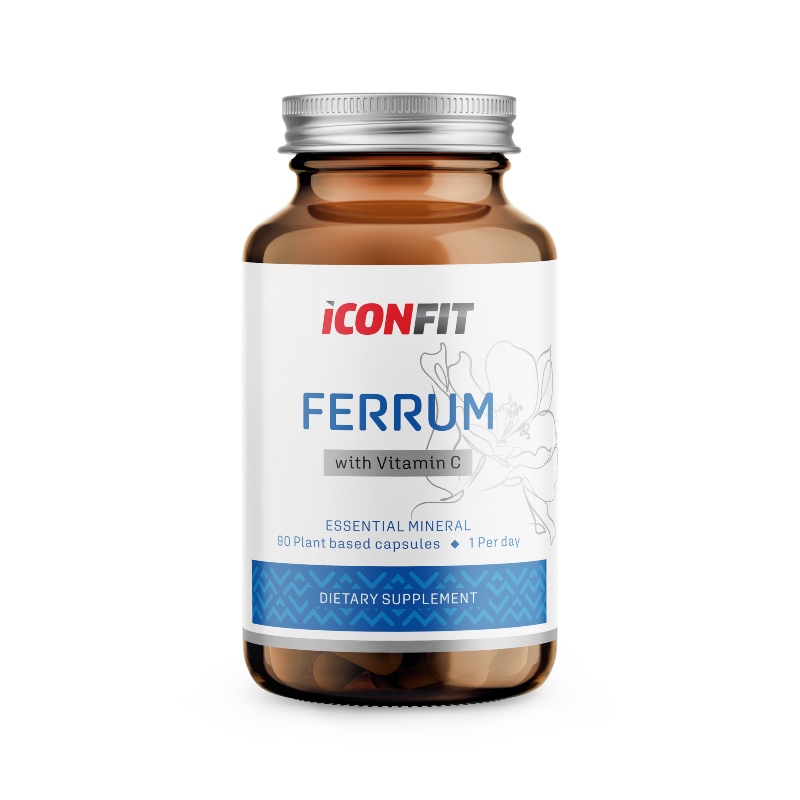
- Our recommendation: Swanson Albion Ferrochel IRON 18mg 180 caps. or ICONFIT Ferrum 90 capsules.
This is general information, not medical advice — if you suspect iron deficiency, talk to a doctor before starting a supplement. Pregnant and breastfeeding women and people taking medication should consult a doctor or pharmacist.
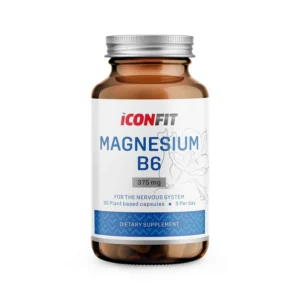
In stock now: Magnesium


Iron is a mineral the body needs to form haemoglobin and to transport oxygen, yet it is hard to tell the iron products on the shelf apart. There are real differences, though: the various forms are absorbed and tolerated differently. In this guide we compare the most common forms, explain who an iron supplement is actually meant for and give practical tips for improving absorption.
What is iron and why do people fall short?
Iron is part of red blood cells and of the oxygen-binding proteins in muscle. According to the claims authorised in the European Union, iron contributes to normal formation of red blood cells and haemoglobin, to normal oxygen transport, to normal energy-yielding metabolism and to the reduction of tiredness and fatigue. It also contributes to the normal function of the immune system and to normal cognitive function.
Food provides iron in two forms. Haem iron from animal foods (red meat, liver, fish) is absorbed considerably better than the non-haem iron in plant foods (beans, lentils, spinach, wholegrain products). That is why the groups at higher risk of low iron include women who menstruate, pregnant women, vegetarians, vegans and endurance athletes, whose iron needs are higher. According to the Nordic Nutrition Recommendations, the recommended intake is 9 mg a day for adult men and postmenopausal women and 15 mg a day for menstruating women; during pregnancy the need is higher.
How to choose: iron forms compared
In a supplement, it is not only the amount of iron that matters but also the form and the carrier. Classic ferrous sulfate is cheap and the most thoroughly studied, but in more sensitive people it often causes stomach complaints. That is why other forms, considered gentler, have come onto the market; direct evidence of their superiority is more limited, however. The table below summarises them. The form matters less than the amount of iron and, above all, whether taking a supplement is justified in the first place.
| Form | Main characteristic | Suits you if… |
|---|---|---|
| Bisglycinate (chelate) | Iron bound to glycine (also called diglycinate); according to several sources gentler on digestion than sulfate | there is a justified need and you have a sensitive stomach |
| Citrate | A well-soluble organic salt | you want an alternative to glycinate |
| Chewable tablet | Flavoured, no swallowing needed | swallowing capsules is uncomfortable |
| Oral spray | The dose is sprayed into the mouth; small daily dose | your stomach reacts to tablets or you want a lower daily dose |
| Ferrous sulfate | Classic, cheap, most studied | you tolerate it well (not part of the selection below) |
A practical principle: the gentler the form, the more likely you are to actually take the supplement regularly. Even the best formulation does not help if the pack is abandoned halfway because of stomach discomfort.
Who an iron supplement suits and who should avoid it
The most important rule: do not take iron “just in case”. The body cannot actively excrete excess iron, so it can build up. Before starting a supplement it makes sense to check ferritin (a marker of iron stores), haemoglobin and, where needed, transferrin saturation. Tiredness has many other causes that have nothing to do with iron.
It is reasonable to consider an iron supplement if
- lab results or your doctor point to low iron stores;
- you have heavy periods and your diet provides little iron;
- you eat a plant-based diet and your menu contains few iron-rich foods;
- you train a lot (especially endurance sports), where iron losses and needs are higher;
- you are pregnant or planning a pregnancy — in that case the dose is decided by a doctor or midwife.
Do not take iron without medical advice if
- you have haemochromatosis or another risk of iron overload;
- you do not know your ferritin level and have no justified suspicion of iron deficiency;
- you take medicines that interact with iron (for example thyroid hormones, certain antibiotics and stomach-acid reducers) — ask a doctor or pharmacist for advice;
- it is for a child — iron products are dangerous for small children and must be kept out of their reach.
The US National Institutes of Health (NIH) have set the tolerable upper intake level for iron in adults at 45 mg a day (from all sources combined). Do not experiment on your own with amounts above the label dose or with long-term use — leave that to a doctor to decide.
How to take iron and improve absorption
- Add vitamin C. Vitamin C helps increase iron absorption, which is why many iron products already contain it.
- Keep a gap from coffee, tea and dairy. Tannins (coffee, tea), calcium and polyphenols inhibit iron absorption — leave about two hours between the supplement and these.
- Iron is absorbed better on an empty stomach, but taken with a meal it is often better tolerated. If you get nausea or stomach pain, take the supplement with food.
- If you have stomach complaints, discuss the dosing with your doctor. Some studies suggest that taking iron every other day may be gentler on digestion, but it does not suit everyone.
- Keep a gap from calcium and zinc supplements. Calcium and large doses of zinc can reduce iron absorption; take them at different times.
Common side effects are constipation, nausea and dark stools — the last is often harmless, but if symptoms persist, talk to a doctor. If you do not feel any change after a couple of weeks, that is not a reason to raise the dose; the effect is reliably assessed by a repeat blood test.
Our recommendations: iron supplements by form
Below are the iron products in the Omegafit range. The product facts (dose, form, quantity) come from the product description — always check the product page and the label for details. Higher doses (for example 25 and 30 mg) are not meant to be taken without a need.




How to decide between them?
- If you are looking for a gentle form: Albion Ferrochel (chelated iron) or ICONFIT Ferrum, which contains diglycinate together with vitamin C.
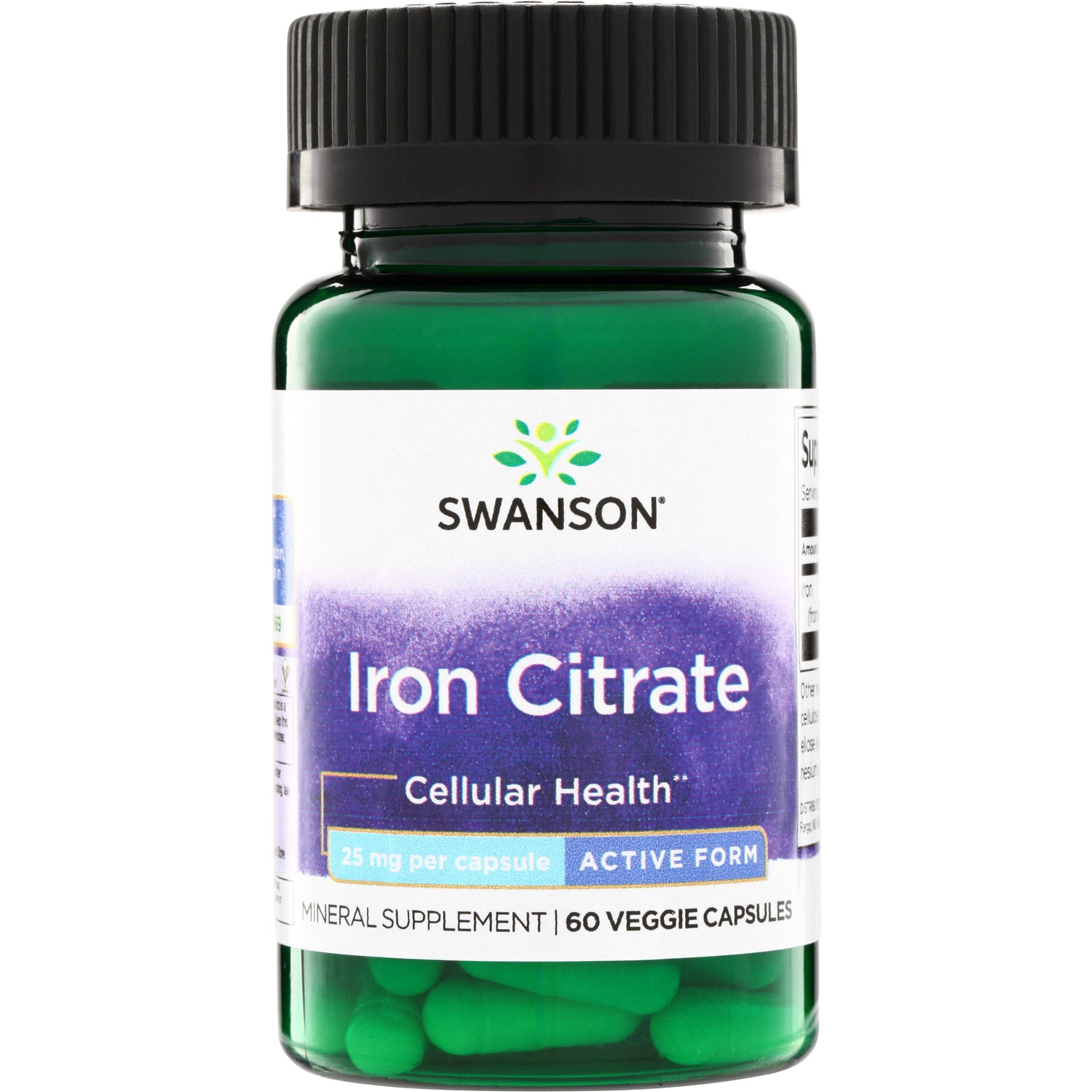
- If you want citrate: Swanson Iron Citrate; the Active Form provides 25 mg per capsule and comes in vegan capsules.
- If swallowing capsules is difficult: the Carlson chewable tablet with strawberry flavour.
- If your stomach reacts to tablets: the BetterYou spray, which according to the manufacturer provides a stomach-friendly 10 mg daily dose — a smaller amount than the tablets.
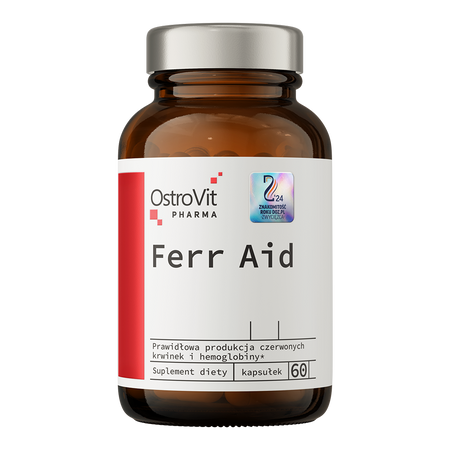
- If you want other nutrients in the same product: OstroVit Ferr Aid and Scitec Iron Pro contain vitamin C, and Scitec also folic acid; check the exact iron amount on the label.
Frequently asked questions
Does everyone who feels tired need an iron supplement?
No. There are many causes of tiredness — sleep, stress, vitamin D deficiency, the thyroid, diet. Iron is one possible cause, but not the most likely one for every person. The clearest answer comes from a blood test for ferritin and haemoglobin.
What is the best time of day to take iron?
For absorption, the best option is on an empty stomach with a source of vitamin C, away from coffee, tea and dairy. If that causes nausea, take it with a meal; a small drop in absorption is better than a course that is abandoned.
How long should you take an iron supplement?
It depends on whether your stores are low and by how much. Rebuilding iron stores often takes several months, not weeks. The duration and dose should be agreed with a doctor, especially if you have had lab tests done.
Why do stools turn dark?
Dark or greenish stools are a common and generally harmless side effect of iron supplements. If the stool is tarry black and sticky, or comes with severe abdominal pain, blood or other alarming symptoms, see a doctor.
Is a spray better than tablets?
Not necessarily. A spray provides a small daily dose and can be convenient if tablets do not agree with your stomach, but the evidence for an advantage is limited compared with tablets. The choice is more a matter of convenience and tolerance.
Can iron be taken together with other vitamins?
It goes well with vitamin C. Take calcium and zinc supplements at a different time, because they can reduce iron absorption. With multivitamins, add up the total iron dose from all sources.
What happens if I take too much?
Too much iron can cause nausea, vomiting and abdominal pain, and if large amounts are taken for a long time it can accumulate in the body and damage organs. Do not exceed the label dose and keep the products out of children’s reach — if a child has swallowed an iron product, call the emergency number right away (112 in the EU).